
 SEARCH

 English
 Español
 Português


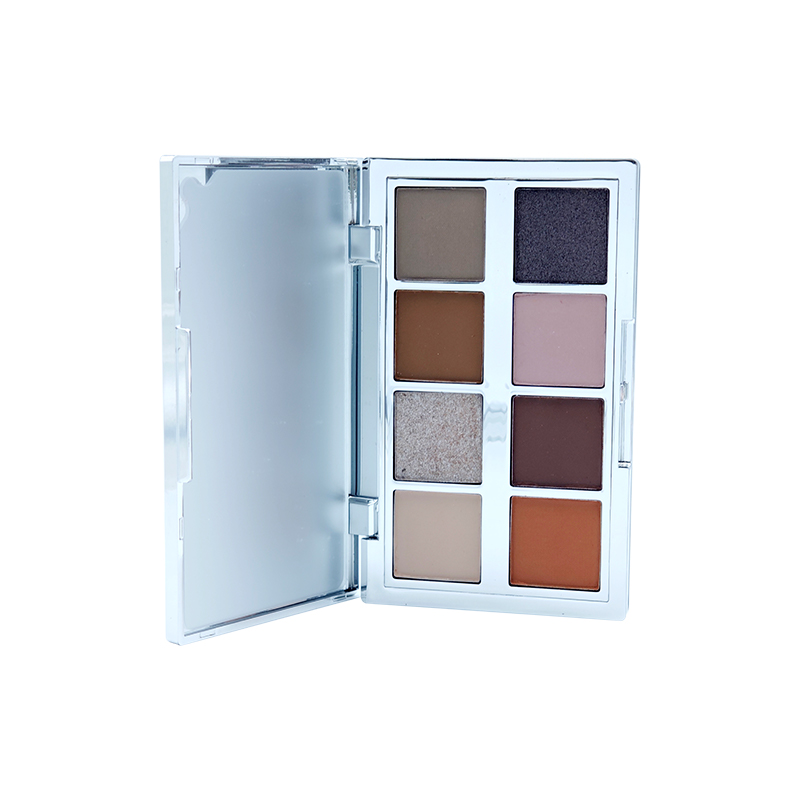
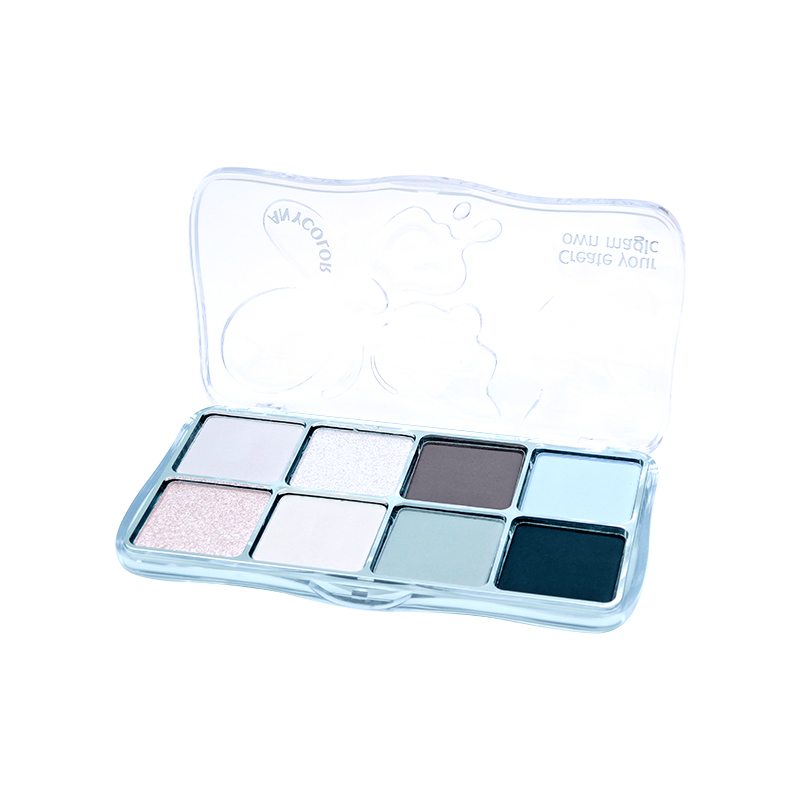
8-Color Neutral Multi-Finish Eyeshadow Palette
Item No.: NF02 Size: 111 X67 X 11 MM NW.: 1...
Swipe a brush across a highlighter pan and the glow on the cheekbone should match what the shopper saw on the counter. When it does not, the product gets returned or left in a drawer. A Baked Powder Highlighter depends on a chain of decisions, from pigment choice to the oven schedule, and each one shapes how the powder looks in the compact and how it behaves on skin.
Preferences swing between a soft, natural sheen and a bold, reflective finish. Either way, buyers expect the same shade, feel, and light reflection each time they reorder. Brands that want that result need to look past the surface of the pan and study raw materials, mixing, formula balance, baking, and inspection together.
Color payoff describes how much visible color transfers to skin in one pass of the brush. In a highlighter it also covers how reflective particles catch light and add dimension.
A pan can look even and still apply patchy. One area may deliver a strong sparkle while the next gives a weak, flat tint. Users notice this quickly, because they pick up product from the same spot day after day.
Three qualities deserve attention:
A shopper who likes a subtle cheekbone glow should not need a heavier hand on the next purchase. Steady results also keep the product recognizable from one batch to the next.
Variation can enter at several points. Finding the source comes before any change to formula or process.
Pigments give the base color, and reflective ingredients give the glow. If they are not spread evenly, the pan holds zones of different intensity.
Common causes include:
These problems often show up only when a brush picks up powder from one corner of the pan.
The same formula gives different results when incoming materials differ. Pigments, mica, and pearlescent powders should be checked before they enter production.
| Material | Role | Effect of Variation |
|---|---|---|
| Color pigments | Create the base shade | Shift in color strength |
| Mica powder | Adds texture and brightness | Change in feel and glow |
| Pearlescent powders | Produce light reflection | Change in shimmer character |
| Binding ingredients | Hold the powder together | Change in pickup and surface |
Keeping approved reference samples of each material helps the team spot a lot that behaves differently.
A small change in ratio can alter the finish. More reflective powder may change how the shade looks under warm indoor light compared with daylight. A different base powder or binder may change how smoothly product transfers to skin.
Any adjustment should be judged by eye and by applying it to skin, not by looking at the pan alone.
A stable formula makes repeat production possible. Each ingredient needs a defined purpose and a steady proportion.
Material selection should go beyond the ingredient name. Check the actual appearance, particle behavior, and how the powder blends with the base. Ask whether the pigment matches the approved shade, whether the reflective powder gives the intended finish, and whether separate incoming lots perform alike.
The balance between color and shine sets the character of the product:
| Desired Finish | Formulation Direction | Appearance |
|---|---|---|
| Natural glow | Balanced color with fine reflective particles | Soft luminosity |
| Pearl shimmer | Reflective ingredients with a light base shade | Delicate reflection |
| Metallic finish | Stronger reflective effect | Defined sheen |
| Tinted highlight | Clearer base color with controlled shimmer | Visible color with radiance |
These are directions, not fixed ratios. Each shade needs its own evaluation.
Written records keep development honest. Note approved ingredient specifications, proportions, mixing order, powder appearance before baking, and finished shade. When a change is needed, compare the revised sample with the original reference before it reaches regular production.
Dispersion describes how color particles spread through the powder. Good dispersion reduces patches and makes application predictable.
Clusters create concentrated spots that transfer differently from the surrounding powder. To limit them, control the order of addition, check compatibility between powders, and fix mixing method and equipment conditions. Inspect the prepared mixture before baking, since a flaw found at this stage costs far less than one found in finished pans.
Particle characteristics matter as well. Powders with very different sizes or surface behavior can separate during blending. Look at the mixture for visible streaks or specks before sending it forward.
A repeatable routine keeps batches alike:
| Factor | Control | Goal |
|---|---|---|
| Ingredient order | Follow an approved procedure | Consistent blending |
| Mixing conditions | Hold equipment settings steady | Even distribution |
| Mixing time | Use formula-specific parameters | Fewer uneven areas |
| Powder inspection | Examine each prepared mix | Early detection of differences |
Baking sets a baked highlighter apart from ordinary pressed powder. The controlled heating step shapes the finished structure and surface, so settings should match the formula rather than follow one routine for every shade.
Temperature influences moisture removal, powder cohesion, and surface quality. Time and moisture are linked. Too little drying can leave a weak or soft structure. Too much heat or time can change the look of the surface or alter how the powder picks up on a brush.
Production staff should monitor the condition of the prepared powder, moisture before baking, temperature and duration, and the finished product after cooling.
Position in the oven can also change results. A standard loading arrangement and steady equipment settings reduce this effect. Record any adjustment so the next batch follows the same approved conditions.
A finished highlighter should be judged as a cosmetic and as makeup applied to skin. Looking at the pan alone cannot show what happens on a cheekbone.
Compare each batch with an approved reference under controlled lighting. Look at shade, brightness, and reflective character. Color measurement equipment can add detail when visual judgment is not enough.
Inspect the surface for uneven color, visible pigment clusters, and differences in particle distribution. These clues help trace a fault to mixing, baking, or another stage.
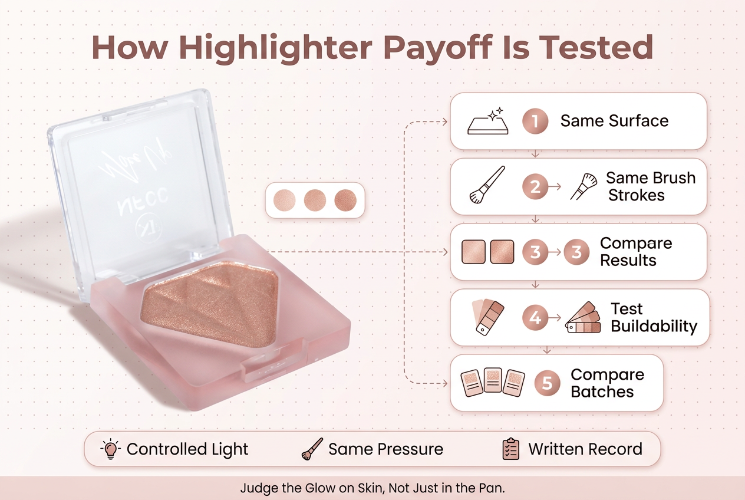
Application testing links the lab to real use:
| Stage | Evaluation | Purpose |
|---|---|---|
| Raw materials | Appearance and specifications | Control incoming lots |
| Before baking | Color and mixing uniformity | Catch preparation issues |
| Finished product | Shade and surface | Check visual match |
| Application | Transfer and shimmer | Judge real payoff |
| Batch comparison | Difference from approved sample | Confirm consistency |
Consistency comes from the whole system, not one adjustment. A formula may perform well in development and drift in production unless teams coordinate.
Write approved instructions for every step: ingredient acceptance, formula preparation, mixing, baking, cooling, and inspection. When all teams follow the same route, deviations become easier to spot.
Batch records support this work. Keep raw material lot numbers, formula versions, mixing and baking conditions, inspection results, and corrective actions. When a complaint arrives, these records show where to look.
Development, production, and quality teams also need to talk. Development defines the color and finish, production follows the approved procedure, and inspectors check the result against the standard. Shared references prevent misunderstandings between sample stage and commercial runs.
A Baked Powder Highlighter with steady payoff requires care at every stage, from ingredient choice to final inspection. Brands choosing a manufacturing partner should ask how formula changes, shade approval, production procedures, and batch checks are handled, not only how the sample looks.
Whether the plan is a soft pearl glow, a tinted radiance, or a bolder shimmer, a defined development process turns the concept into a reliable product. Cosmetic brands can contact our team to discuss shades, finish, formula needs, and OEM/ODM requirements, and explore formulation and production options that fit their specifications.

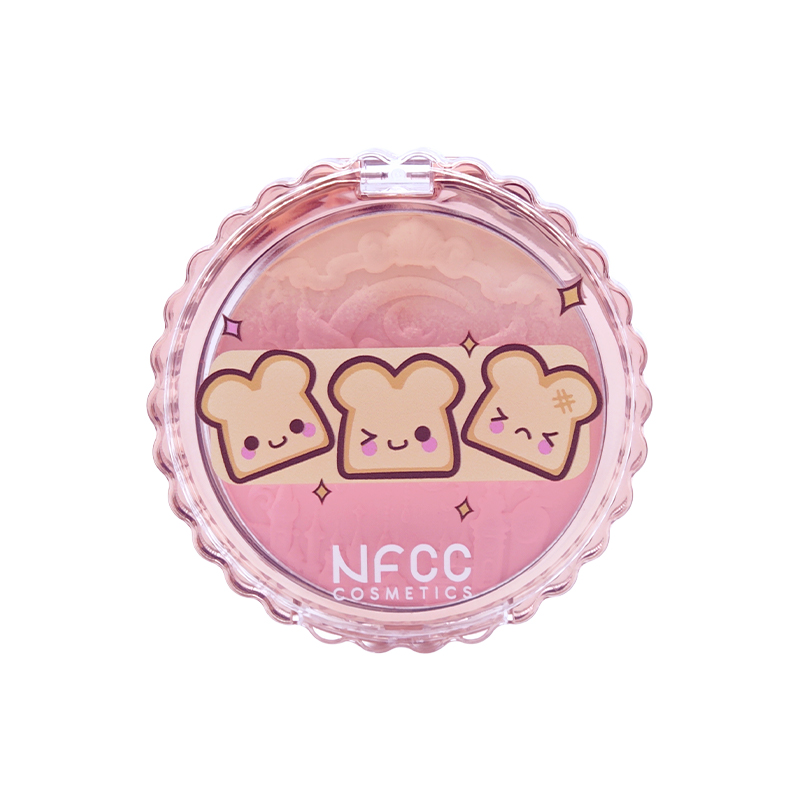
Swipe a brush across a highlighter pan and the glow on the cheekbone should match what the shopper saw on the counter. ...
A highlighter that looked flawless on day one develops a hairline fracture after a week. By the second week a corner ha...
Two highlighters in the same champagne shade can look completely different on the cheekbones. One gives a soft, skin-li...
Zhejiang NiFei Cosmetic Co., Ltd. will exhibit at Cosmoprof Asia 2026, taking place from November 10 to 12, 2026, at th...
A flattering shade can still be uncomfortable when the formula sits thickly on the lips. Tackiness usually traces back ...
A lipstick often looks different in the tube than it does on the lips. Lip Color Changing Lipstick is formulated to de...


 No.333 Caihong Road,Linjiang Industry, Bailongqiao Town,Jinhua City, Zhejiang Province, China
 +86 13750973917+86 18248557685
 [email protected]
Copyright ©Zhejiang NiFei Cosmetic Co., Ltd. Rights Reserved.